

Afraid of IVF Injections? Learn How Needle-Free IVF Can Make Treatment More Comfortable
For many people considering fertility treatment, a common question is:
Does IVF hurt?
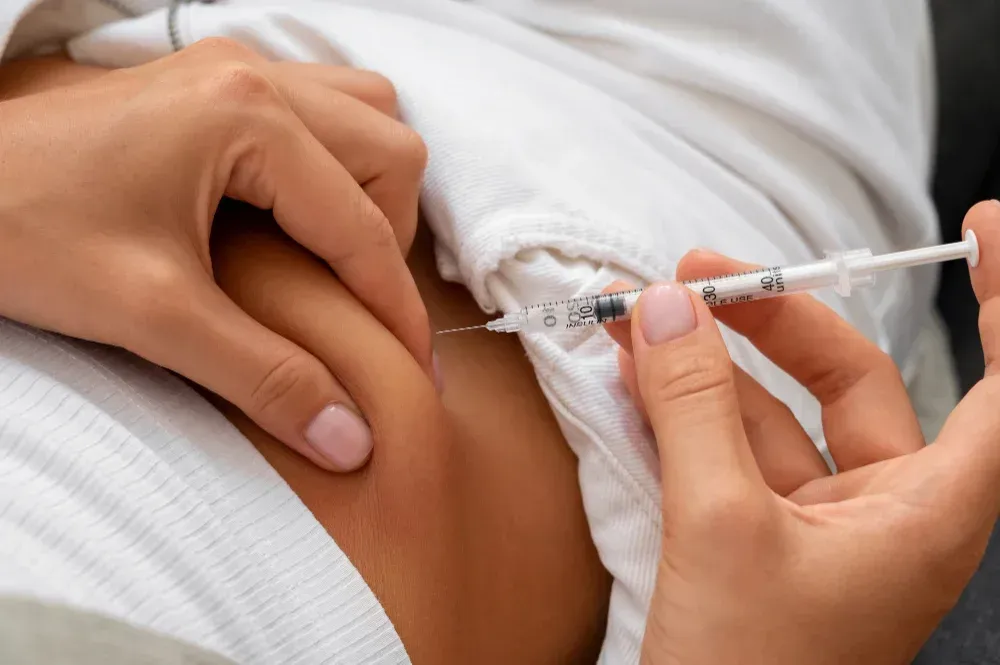
Although IVF has allowed millions of people to achieve pregnancy, the thought of having daily injections can be daunting. The fear of needles, concerns about pain and anxiety about the repeated injections usually leads to a lack of willingness or even postponement of treatment.
The good news? In the same way, IVF has never been patient-friendly due to advances in fertility care. Needle-free IVF is transforming the experience since it greatly decreases pain without compromising the safety and efficacy.
Why IVF Injections Cause Anxiety
The conventional IVF treatment usually includes regular hormone injections at the stimulation phase. Patients often worry:
- Do IVF needles hurt?
- Are IVF shots painful?
- Will the daily injections prove intolerable with time?
The emotional stress of using needles repeatedly may take a toll even when pain is manageable. Very real concerns to many patients are bruising, soreness, and psychological fear of injections sometimes referred to as needles fatigue.
Do IVF Injections Hurt? The Experience of the Patients
The vast majority of IVF drugs are administered via subcutaneous injections, and these are not as painful as intramuscular injections. Nevertheless, in cases where injections need to be taken daily or several times a day, patients can experience:
- Mild to moderate discomfort.
- Local redness or swelling.
- Bruising at injection sites.
- Anxiety on the rise with each dose.
With time, any little amount of pain may feel significant when done frequently. This is the reason why IVF injections are said to be stressful to many patients even when they are medically required.
Why are Injections Needed in IVF Treatment?
IVF injections are very important in:
- Stimulation of ovaries to release multiple eggs.
- Supporting egg maturation.
- Preparing the body for embryo transfer.
It is necessary to have the right and uniform administration of medication in the case of IVF. Although injections are good, they are not the sole means through which medications can be used and that is where innovation comes in.
Alternative for IVF Injections: Needle-Free IVF
A new way of IVF medication injection is needle-free IVF, which involves IVF medications that are administered without needles that are repeated.
As an alternative to a needle per injection, a small subcutaneous infusion pump is placed beneath the skin, typically on the lower abdomen. The soft cannula is inserted once and stayed there several days, helping to administer medications via tubing instead of using a needle every time.
The needle is inserted during initial placement, and then automatically withdrawn so that patients do not receive multiple needle injections during the stimulation period.
How Needle-free IVF helps to minimize pain and discomfort?
The question which patients tend to ask is whether IVF shots are painful or not-and needle-free IVF directs this question to the answer.
Here’s how it helps:
- Reduced daily injections to a single insertion.
- No repeated skin puncture, eliminating soreness and bruising.
- Reduced anxiety, particularly with patients who fear needles.
- Better comfort during longer stimulation cycles.
The reduction of needle exposure has resulted in more patients saying that IVF is a much less stressful experience.
Needle-Free IVF vs Traditional IVF Injections
| Aspect | Traditional IVF Injections | Needle-Free IVF |
|---|---|---|
| Number of needle sticks | Daily or multiple per day | One-time insertion |
| Pain & discomfort | Repeated mild pain | Significantly reduced |
| Anxiety level | Higher for needle-sensitive patients | Lower |
| Ease of use Patient comfort | Frequently requires injections Moderate | Simplified routine High |
Both procedures are clinically acceptable. Results and experiences vary by patient. Treatment options are determined after evaluation by a qualified fertility specialist,
and the
needle-free IVF focuses more on comforting the patient without compromising the outcomes.
Who Should Consider Needle-Free IVF?
The needle-free IVF can be particularly useful in case of:
- Patients having needle anxiety or phobia.
- Patients using IVF for the first time often have concerns about injections.
- Patients who need several injections per day.
- Patients who experienced discomfort in previous IVF cycles.
Your fertility specialist will determine whether this is in line with your individualized treatment plan.
Is Needle-Free IVF Safe and Effective?
The answer is yes. The usual concern is whether needle-free IVF administers drugs as well as injections.
Needle-free IVF:
- Administers medication subcutaneously, which is the case with conventional injections.
- Gives precise and regulated dosage.
- Does not affect the success rates of IVF.
- Prescribed and followed up by fertility experts.
Safety and effectiveness are the number one priority, and comfort to the patients is a bonus.
Cost Considerations for Needle-Free IVF
The cost of needle-free IVF varies based on:
- Length of the stimulation phase.
- Type of medications prescribed.
- Device and supply requirements.
- Individual treatment protocols.
While costs may differ from traditional injection methods, many patients find the added comfort and reduced stress to be a valuable part of their treatment journey. Your clinic can provide personalized cost details.
Expert Insight: Comfort Matters in IVF
Fertility treatment is not just a physical process; it’s an emotional one. Reducing discomfort can improve adherence to medication schedules, lower stress, and create a more positive treatment experience overall.
Modern fertility care recognizes that patient comfort plays a meaningful role in successful treatment journeys.
FAQs About Needle-Free IVF
1. Does needle-free IVF hurt?
No, this is very fast and rather painless in comparison to traditional injections. Majority of patients complain of little to no pain.
2. How long does the device stay in place?
The implant is usually left for 9-12 days, which consists of the stimulation period.
3. Is it possible to continue normal daily activities?
Yes. The majority of daily activities are permissible, but swimming, saunas, steam rooms, or heavy sweating are not recommended as this can interfere with the adhesive.
4. What are the drugs that can be taken?
Needle-free IVF can be used with drugs that are prescribed to be used subcutaneously, and it needs a Luer lock syringe. There is no compatibility of intramuscular medications.