


Preimplantation Genetic Testing (PGT)
Preimplantation Genetic Testing is a process is to evaluate the chromosomal makeup of an embryo and to look for other specific genetic abnormalities. This technology, known as next-generation sequencing, enables the evaluation of embryos for genetic problems prior to transferring them into the uterus, thus increasing the probability of a having a healthy pregnancy.
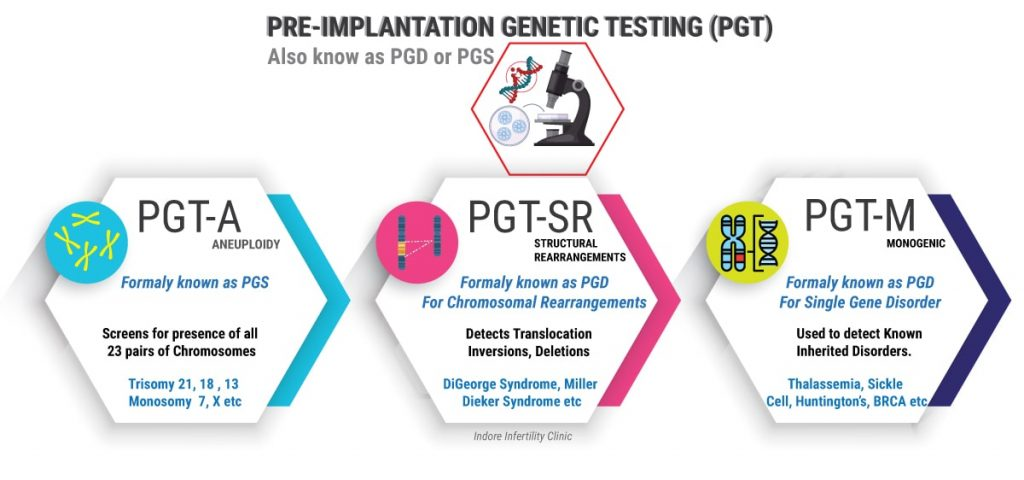
PGT-A (For Aneuploidy)
PGT can test for and potentially prevent many diseases and genetic disorders:
Aneuploidy is a condition where a cell has an incorrect number of chromosomes—too many or too few. Chromosomes contain all genes and DNA; the building blocks of the body. Humans have 46 chromosomes, or 23 pairs. These include chromosomes 1 to 22 (the autosomes) and chromosomes X and Y (the sex chromosomes). During fertilization, an embryo receives 23 chromosomes from the sperm and 23 chromosomes from the egg to form either 46,XY (normal male) or 46,XX (normal female). Aneuploidy disorders do not typically run in families and can include Down Syndrome, Trisomy 18, Trisomy 13 and Turner Syndrome.
Because the majority of miscarriages are due to chromosomal abnormalities, many couples undergo PGT in order to select embryos that are chromosomally “normal” and increase their chances of success with IVF.
An embryo with too many or too few chromosomes (aneuploidy) may result in the following:
- Failure of implantation in the uterus
- Pregnancy loss (miscarriage)
- Abnormal pregnancy such as Down Syndrome (trisomy 21) or Edward’s Syndrome (trisomy 18)
PGT-A can also be used for gender selection (boy or girl) in situations where couples desire family balancing or who are at risk for having a child with a sex-linked disease.
PGT-M (For Monogenic Disorders)
Single Gene Defects: These genetic disorders are caused by inheritance patterns (recessive or dominant) and can be passed on if they are prevalent in families. Some of the more common single-gene disorders include Tay-Sachs disease, Cystic Fibrosis, Muscular Dystrophy, Fragile X Syndrome or Spinal Muscular Atrophy. Cystic Fibrosis (CF) is one of the most common genetic disorders. People who are carriers of a disorder are not affected with CF due to the fact they have one normal, matching gene in their double stranded DNA. If, however, an embryo is produced that inherits both abnormal genes (one from the mother and one from the father), Cystic Fibrosis will result. Thus, when both parents are carriers, the risk of conceiving a baby with CF disease is 25%. PGT-M is useful for couples with these heritable genetic mutations carried by one or both parents.
PGT-SR
(For Chromosomal Structural Rearrangements)
Chromosome Translocations: These are abnormalities of a chromosome’s structure. Translocations occur when fragments or pieces of a chromosome break off and rearrange onto a different chromosome or rearrange within itself. Balanced translocations contain all genetic information, but pieces of chromosomes have switched places resulting in no gain or loss of chromosome material. Unbalanced translocations result in an individual having more or less chromosomal material, thus causing genetic defects. These genetic problems can result in an unbalanced embryo, destined to miscarry. PGT-SR can assist in identifying balanced or unaffected embryos to improve IVF success for couples affected with chromosome translocations.
Limitations of PGT
The risk of a misdiagnosis resulting in a fetus or baby with chromosome abnormalities after PGT is less than two percent. However, PGT is unable to study every chromosome and does not guarantee the birth of a healthy baby. Because of these limitations, prenatal testing later in pregnancy is strongly advised in order to confirm the diagnosis and review the number and structure of all the chromosomes.
Depending on cell development and several other factors, some PGT testing may yield no diagnosis for individual embryo/s. Sometimes, no normal embryos are identified for embryo transfer. The likelihood that this will happen is often dependent on your age, as risk of chromosomal abnormalities increases with age.
How the PGT Process Works at Precision IVF
Sometimes, embryos can look healthy but still have genetic or chromosomal issues that may affect pregnancy. Preimplantation genetic testing (PGT) is used to screen embryos before transfer during IVF treatment. For personalized fertility care, Dr. Sushila Arya offers advanced genetic testing of embryos at Precision IVF. PGT testing can be recommended for patients being treated for fertility, IVF, LGBTQ+ family formation, and recurrent pregnancy loss. Precision IVF has three convenient clinics in Frisco, Southlake, and El Paso and we make fertility care more accessible to patients throughout Texas.
1. Fertility Medications and Egg Retrieval
At Precision IVF, the process begins with fertility medications, which induce a second cycle of egg production in the ovary during an IVF cycle. Prior to the egg retrieval procedure, Dr. Sushila Arya and the fertility team will be closely watching the growth of the follicles and the level of hormones.
2. Fertilization and Embryo Formation
Once the eggs have been retrieved, they are inseminated with sperm in the IVF laboratory to form embryos. After several days, the embryology team closely watches the development to assess growth (and development) prior to genetic testing.
3. Embryo Biopsy Procedure
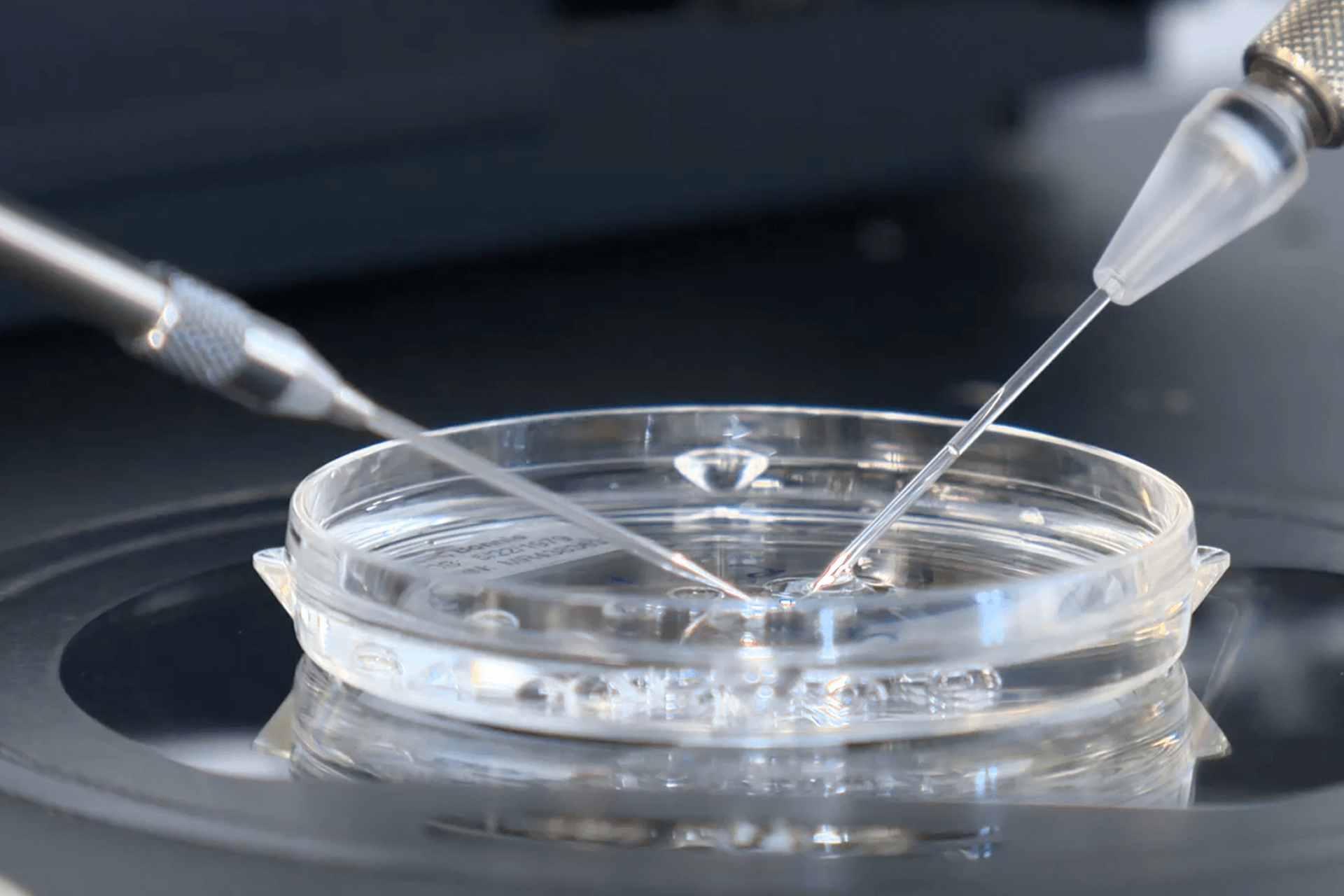
At the blastocyst stage, a small number of cells are placed carefully into the test tube for analysis from each of the embryos. The procedure of biopsy on embryo is carried out by the IVF embryology team in the precision IVF laboratory with advanced IVF laboratory technology and handling.
4. Preimplantation Genetic Testing
The biopsied cells are then sent for preimplantation genetic testing (PGT), which is used to identify some chromosome abnormalities and/or inherited genetic disorders. Once Dr. Arya examines the genetic testing results and embryo growth, she will advise patients on the next steps in treatment.
5. Frozen Embryo Transfer
Following the biopsy, the embryos are frozen while the genetic testing results are processed. When the results are available, Dr Arya plans for the patients with the chosen embryo a frozen embryo transfer (FET) cycle.
Clinical Safety Note: Medical studies show that a blastocyst biopsy performed by a trained embryologist does not damage the embryo or lower live birth rates, because cells are only taken from the tissue that later develops into the placenta.
Why Choose Precision IVF for Genetic Testing?
Advanced PGT Testing Services.
As a part of IVF treatment, Precision IVF provides advanced preimplantation genetic testing, which includes PGT-A, PGT-M, and PGT-SR. Embryos are under observation in the IVF laboratory and embryo biopsy techniques are carried out using the latest fertility technology before embryo transfer.
Personalized Fertility Treatment Plans
Dr. Sushila Arya thoroughly evaluates every patient's fertility history, prior IVF treatments, age, and fertility needs when recommending genetic testing or fertility treatment. Treatment and recommendations are based on patients' individual fertility issues rather than a general treatment plan.
Experienced Fertility and Embryology Staff.
The team at Precision IVF comprises skilled IVF doctors and embryology experts who actively monitor embryo development during the IVF cycle. Patients are guided and supported throughout all the stages of embryo genetic testing and frozen embryo transfer.
Advanced IVF Laboratory Techniques
The Precision IVF laboratory practices the highest quality embryo culture, embryo biopsy, and embryo cryopreservation techniques. Once PGT is done, these techniques support the selection of genetically viable embryos for safe transfer to the uterus.
Treatment for Complex Fertility Conditions
Precision IVF offers fertility care for women who have experienced multiple miscarriages, failed previous IVF, are facing advanced maternal age, and have inherited genetic disorders. Genetic testing for IVF embryos may help support embryo selection in these situations.
Three Convenient Fertility Clinic Locations
Precision IVF offers fertility treatment and genetic testing services in three convenient locations in Frisco, Southlake, and El Paso. Patients from across the state of Texas have readily available IVF treatment, PGT testing, fertility evaluations and frozen embryo transfer services with fertility care near them.
Should I have genetic testing/PGT performed on my embryos?
This depends on a number of factors including your age, medical history, family history and other risk factors. As a rule, genetic testing can improve pregnancy rates by identifying those embryos that are most likely to make a baby.
Affordable PGT Testing and Fertility Financing
Patients at Precision IVF receive clear pricing and flexible financing for IVF and PGT genetic testing. Dr Sushila Arya and the team assist the patient before treatment to clarify the treatment costs, insurance coverage and payment options.
List of Services
-
Insurance SupportList Item 1
Precision IVF accepts multiple insurance plans for fertility evaluations and treatment. Our team checks insurance coverage and provides an explanation of part of the IVF treatment, fertility testing or genetic testing that could be covered under the patient's own plan.
-
Flexible Financing with PatientFiList Item 2
Precision IVF partners with PatientFi financing to provide flexible monthly payment options for fertility treatment and genetic testing. Financing plans can help patients manage IVF and PGT treatment costs with budget-friendly payment options.
-
Transparent and Affordable PricingList Item 3
Precision IVF is committed to providing transparent and affordable pricing for fertility treatments and genetic screening services. Our team offers personalized treatment plans based on each patient’s unique fertility needs, with clear guidance on costs, available options, and financing support. We also provide affordable fertility evaluations and advanced embryo transfer services to help make high-quality fertility care more accessible.

Frequently Asked Questions
1. Is Genetic Testing Covered by Insurance?
Genetic testing during pregnancy may be covered by insurance if it is medically necessary. Coverage depends on your insurance provider, medical history, and the type of genetic test recommended by your doctor.
2. What Diseases Can Be Detected Through Genetic Testing?
Genetic testing can help detect inherited disorders and chromosomal abnormalities such as Down syndrome, cystic fibrosis, sickle cell anemia, thalassemia, Fragile X syndrome, and spinal muscular atrophy (SMA).
3. How Long Does Genetic Testing Take?
Most pregnancy-related genetic tests take a few days to a few weeks to complete, depending on the type of test and laboratory processing time.
4. How Long Does It Take to Get Genetic Testing Results?
Genetic testing results are usually available within 1 to 3 weeks. Some specialized tests may take longer depending on the complexity of the analysis.
5. Where to Get Genetic Testing?
Genetic testing can be done at fertility clinics, OB-GYN offices, hospitals, and specialized genetic laboratories. If you are looking for genetic testing in Frisco, Fort Worth, or El Paso, Precision IVF offers fertility-related genetic testing and personalized care to help support your pregnancy and family planning journey.